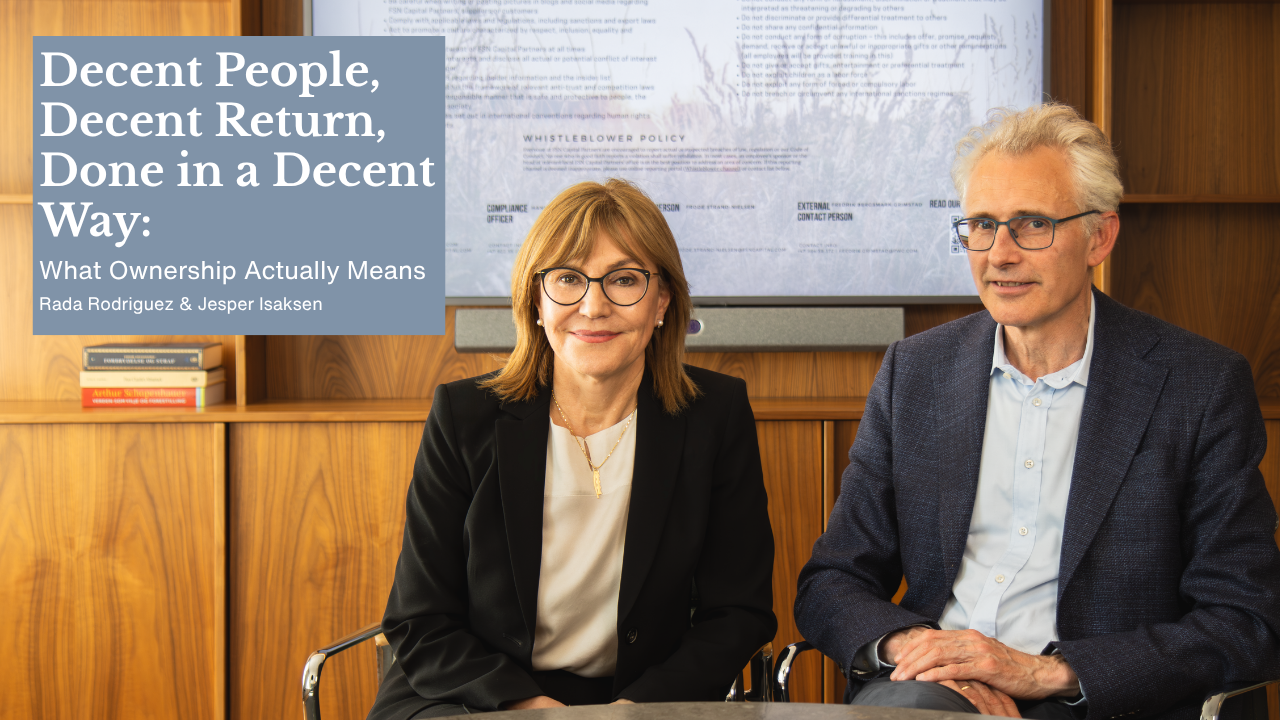
Decent People, Decent Return, Done in a Decent Way: What Ownership Actually Means
In this conversation, Rada Rodriguez & Jesper Isaksen, on what decent ownership really means: private equity returns, ESG under pressure, and the truth about five-year transformation timelines.

Everyone Has a Growth Strategy. Few Know Where Growth Will Come From
Rada Rodriguez talks growth strategy with Jesper Isaksen of FSN Capital. Why most companies can't say where growth will actually come from, how capital allocation exposes the gap between strategy and reality, and why simplification and decentralization matter most as companies scale. A boardroom view on what real strategic clarity requires.

Middle Management: The Layer Boards Often Miss
Middle management is where transformations succeed or quietly stall, long before boards can see it. Rada Rodriguez and Jesper Isaksen, Partner and Head of Talent at FSN Capital, on the risks boards miss and what it takes to build real alignment from C-suite to shop floor.
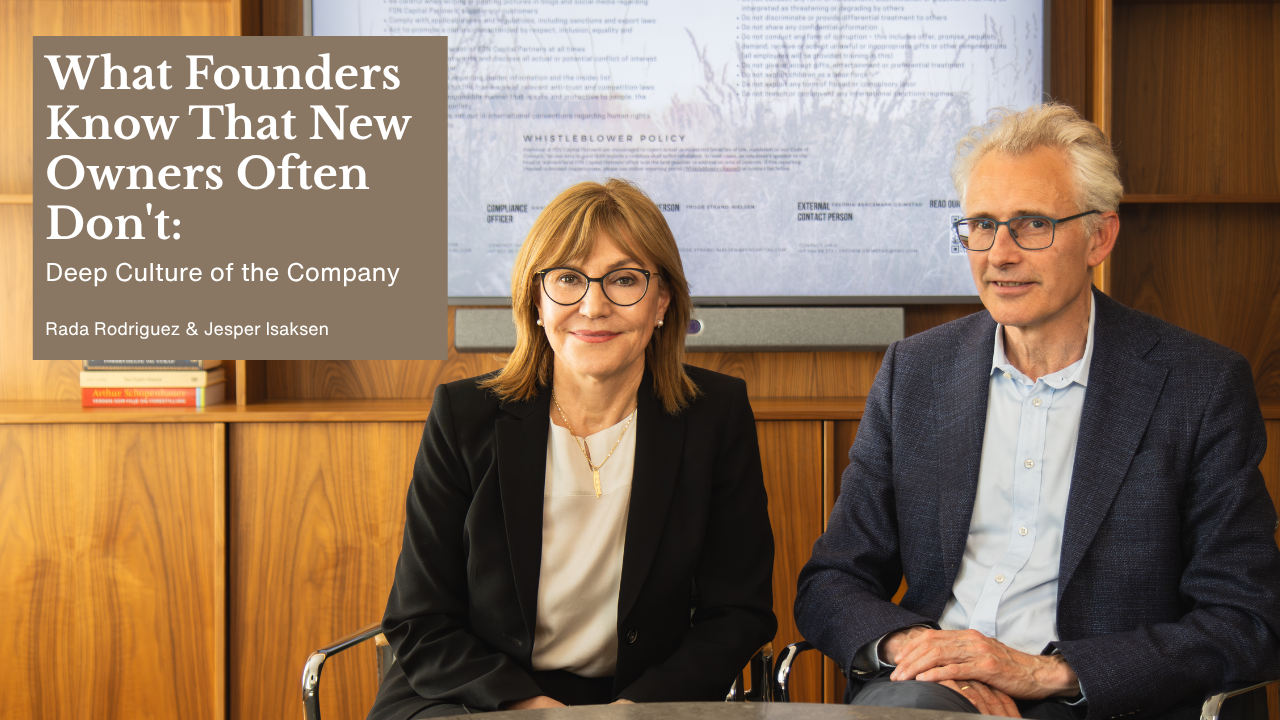
What Founders Know That New Owners Often Don't: Deep Culture of the Company
Acquisitions fail not at the negotiation table but after it. Rada Rodriguez and Jesper Isaksen on what founders know, why transparency gets misread as distrust, and what it actually takes to preserve the culture you paid for.

Transformation Needs Owners Who Stay Close Enough to Understand
Rada Rodriguez and Jesper Isaksen, Partner at FSN Capital, discuss what active ownership really means in transformation. From the troika governance model to middle management and capital allocation, this conversation covers what boards and owners need to stay close to reality.

When Disruption Becomes a Governance Question
Rada Rodriguez shows how technological disruption reshapes corporate governance. This article focuses on how boards align strategy, investment, and execution to sustain direction over time, and why governance, not innovation alone, determines success in periods of transformation.

The Hidden Fault Lines of Transformation
Rada Rodriguez examines how transformation reshapes influence inside organizations. As roles, incentives, and power shift, resistance often emerges in subtle ways that affect execution. This article explores why aligning culture, talent, and decision-making dynamics is critical to sustaining transformation.
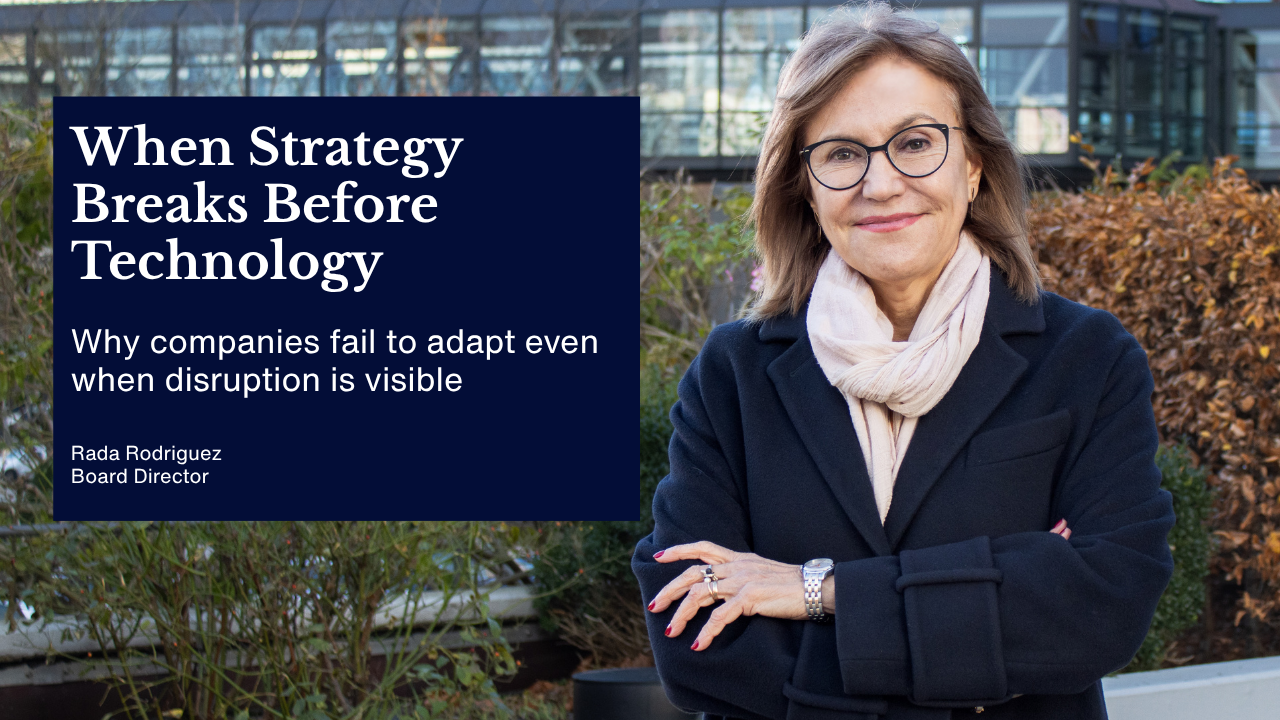
When Strategy Breaks Before Technology
Rada Rodriguez explains why technology rarely destroys companies but exposes where strategy no longer holds. The real risk lies in delaying change while the core still performs. She examines how strategic inertia develops, why assumptions must be challenged early, and why capital allocation determines whether transformation becomes real.

Technology, Capital, and the Board’s Strategic Responsibility
In industrial technology companies, disruption reshapes business models rather than replacing products. Rada Rodriguez explains why boards must move from oversight to ownership, focusing on capital allocation, strategic priorities, and how to detect early signals of transformation.
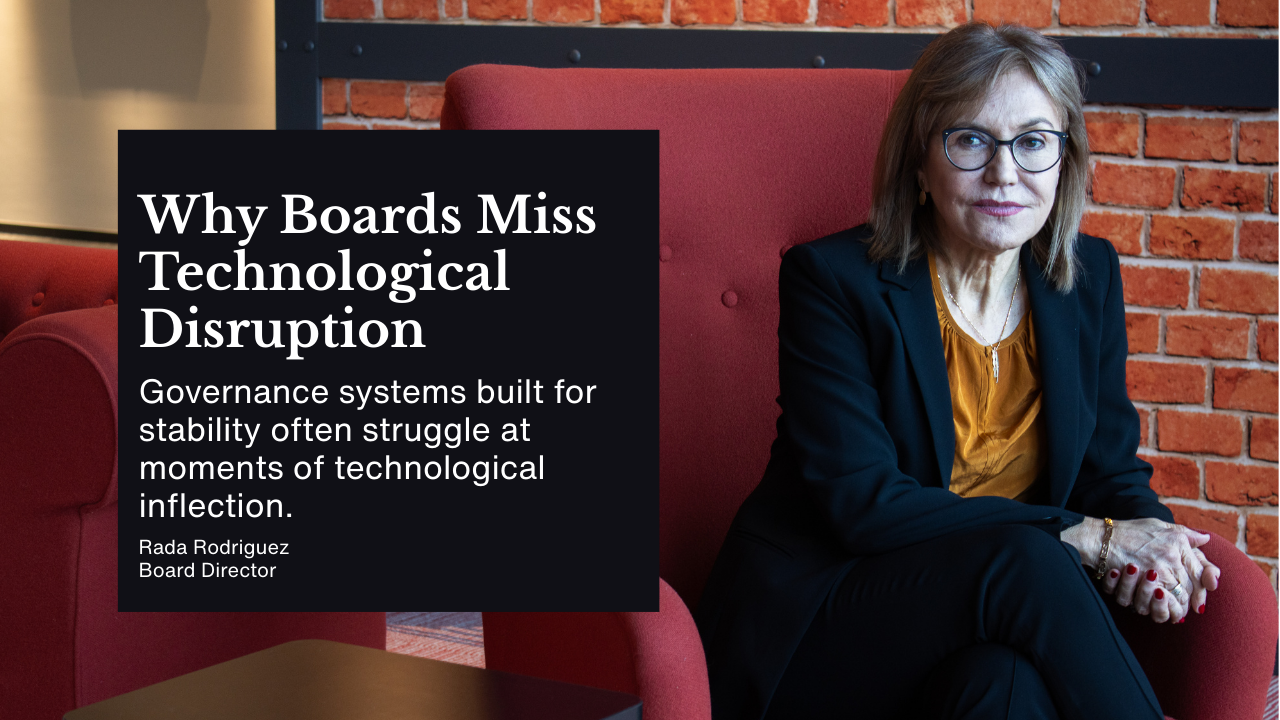
Why Boards Miss Technological Disruption
Technological disruption often reaches the boardroom too late. Rada Rodriguez explains why governance structures create a structural lag in detecting disruption and how boards can improve oversight by focusing on business model assumptions, competitive dynamics, and strategic risk discussions.
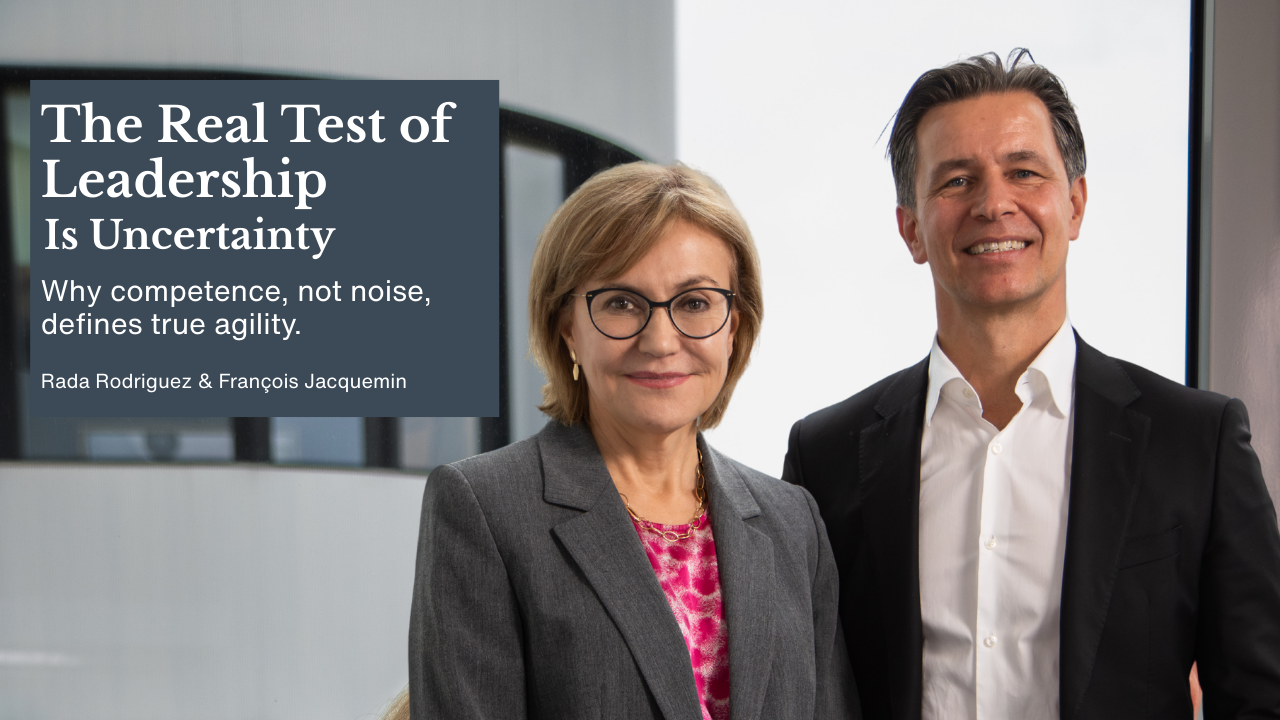
The Real Test of Leadership Is Uncertainty
In times of uncertainty, many leaders respond with constant change. But reorganisation is not the same as strategic clarity. In this conversation, Rada Rodriguez and François Jacquemin reflected on what leadership truly means in volatile times. One insight stood out: uncertainty does not test how fast you move. It tests how disciplined you think.
Crisis Management Starts Before the Plan
Effective crisis management starts with acknowledging “not business as usual” at the right moment. This article explains how leaders and boards avoid emotional decisions, bring the right people and data to the table, build a solid plan fast, and use culture and scenarios to build resilience.
Boards Don’t Execute. They Enable Execution
Boards don’t execute transformations, but they decide whether the strategy is feasible. This article explains what strategic repositioning really requires: deep business understanding, insight into external disruption, realistic pacing vs organizational inertia, and a disciplined narrative that enables execution.
Transformation Will Never Be This Slow Again
Transformation is accelerating and will not slow again. This article explains what boards must decide when change becomes permanent: strategic positioning, risk appetite, European execution realities, and how culture, middle management, and “stayers” determine whether transformation delivers results.
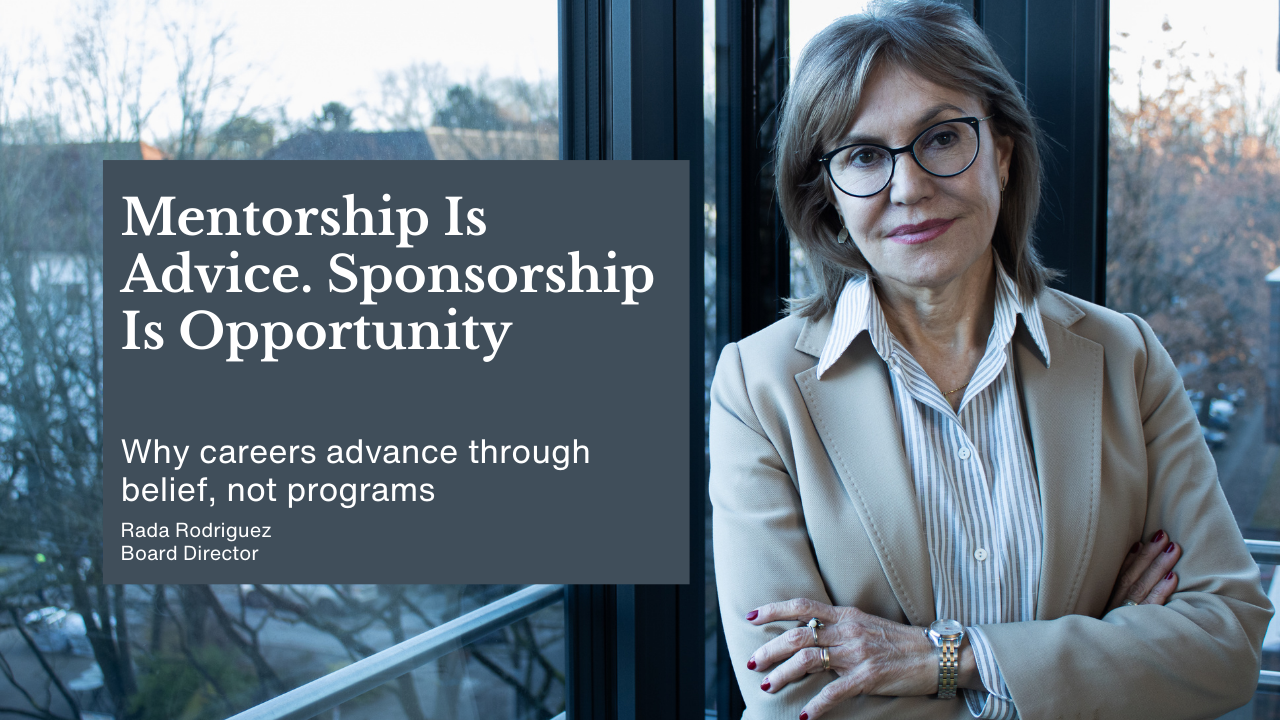
Mentorship Is Advice. Sponsorship Is Opportunity
Mentorship builds insight; sponsorship builds careers. This article explains why advancement comes from sponsors who provide exposure and stretch assignments, how succession planning enables cross-functional “leap” moves, and why company support decides whether talent succeeds.
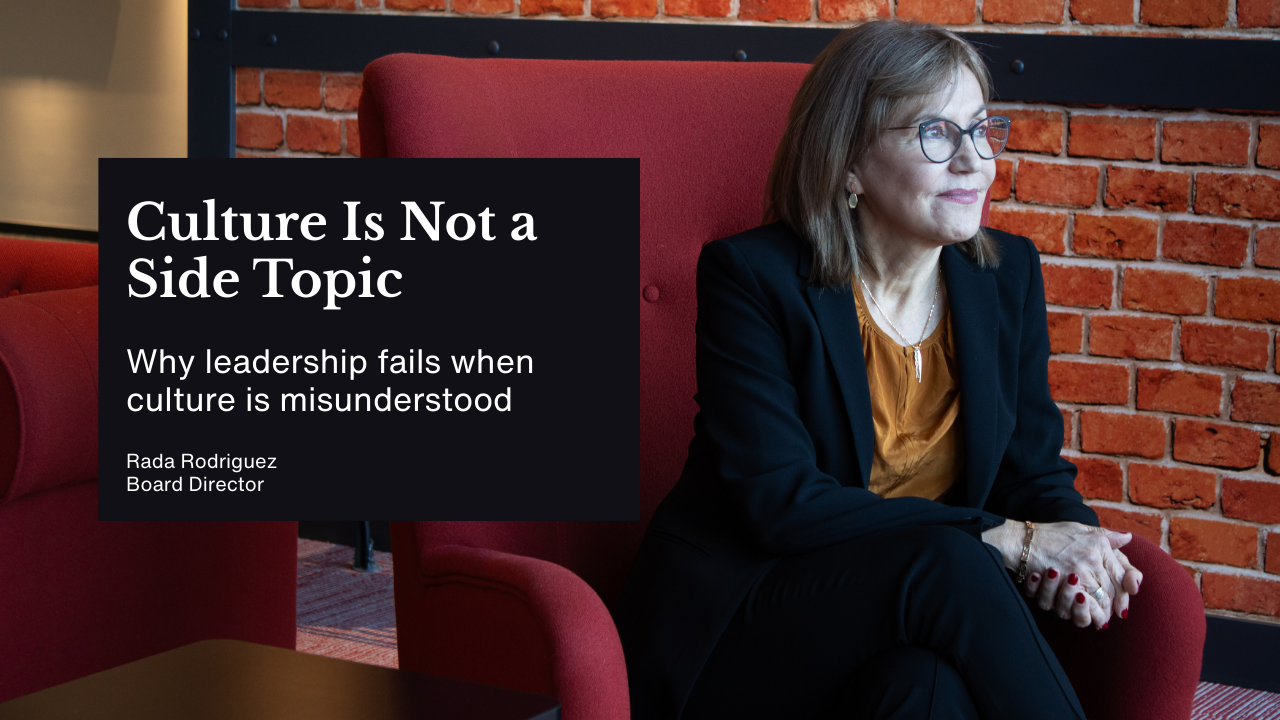
Culture Is Not a Side Topic
Culture sits underneath strategy and determines execution. This article explains why leaders fail when they misread company culture, how generations, economic pressure, and virtual work reshape it, and what CEOs and boards must do to evolve culture deliberately without losing trust or talent.
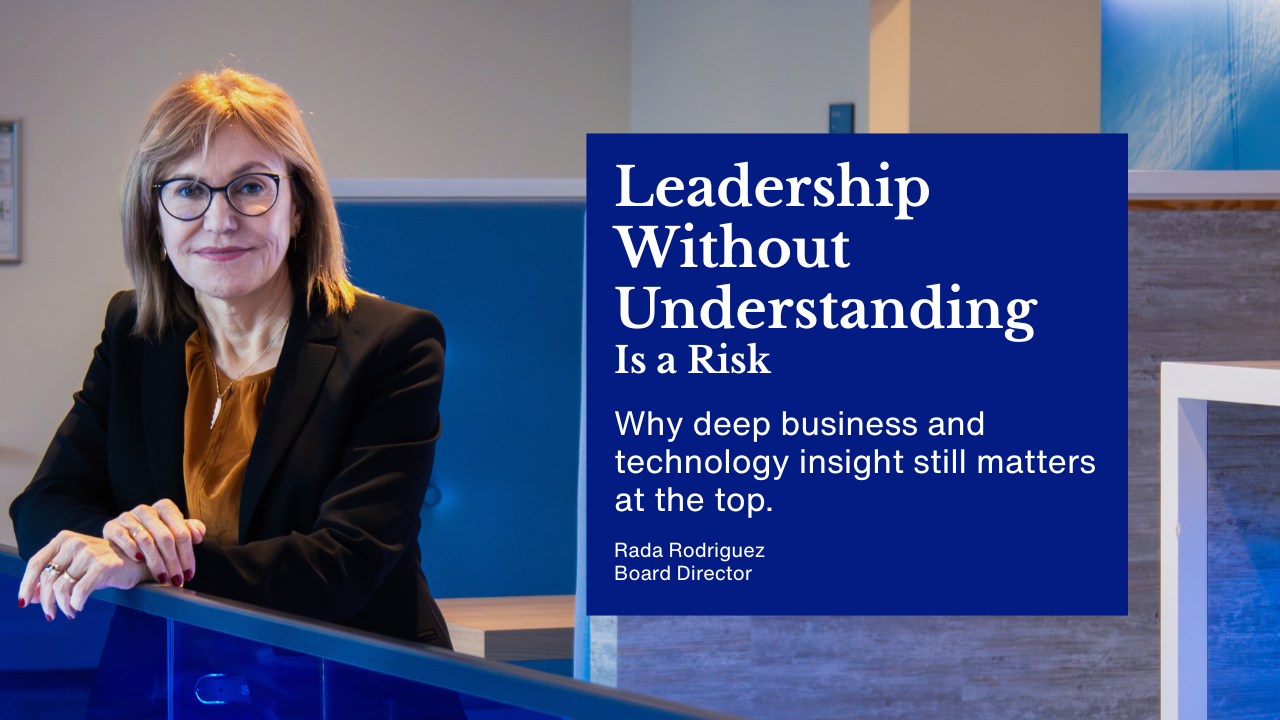
Leadership Without Understanding Is a Risk
Leadership without deep business and technology understanding is a strategic risk. Why boards and CEOs in technology-driven companies must align leadership capability, industry insight, and transformation mandates to avoid costly blind spots.
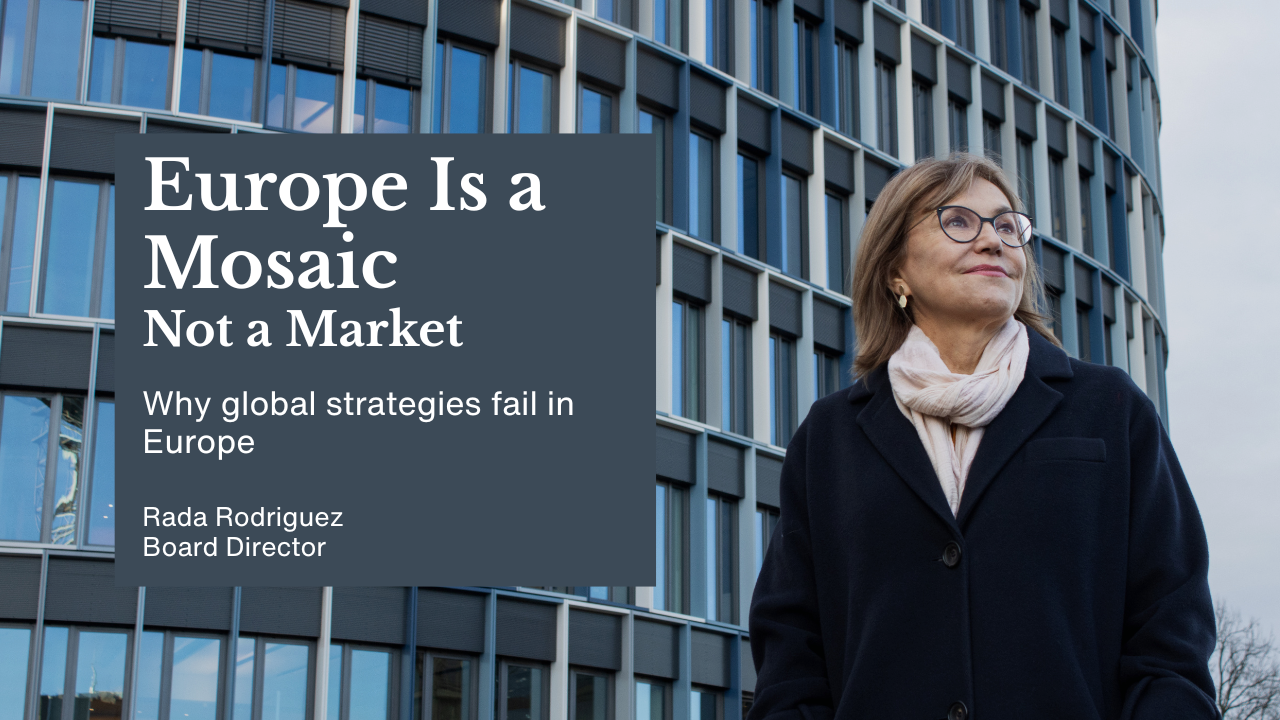
Europe Is a Mosaic, Not a Market
Europe is not a single market but a complex mosaic of national systems. This article explains why global strategies often fail in Europe, how boards misjudge execution risk, and why country level understanding is a decisive competitive advantage.